Not just another “What should I eat?” app
I designed a meal and grocery assistant that helps international students decide meals faster, plan their week and stay within a tight budget
Role:
Product Designer (solo)
Timeline:
April 2025 - July 2025;
4 Months
Skills:
→ User Experience
→ Market Research
→ IA & Product Architecture
→ Visual Design
→ Design systems
→ Prototyping
Academic Assessment:
→ 1.0 GPA (German)
Project Overview:
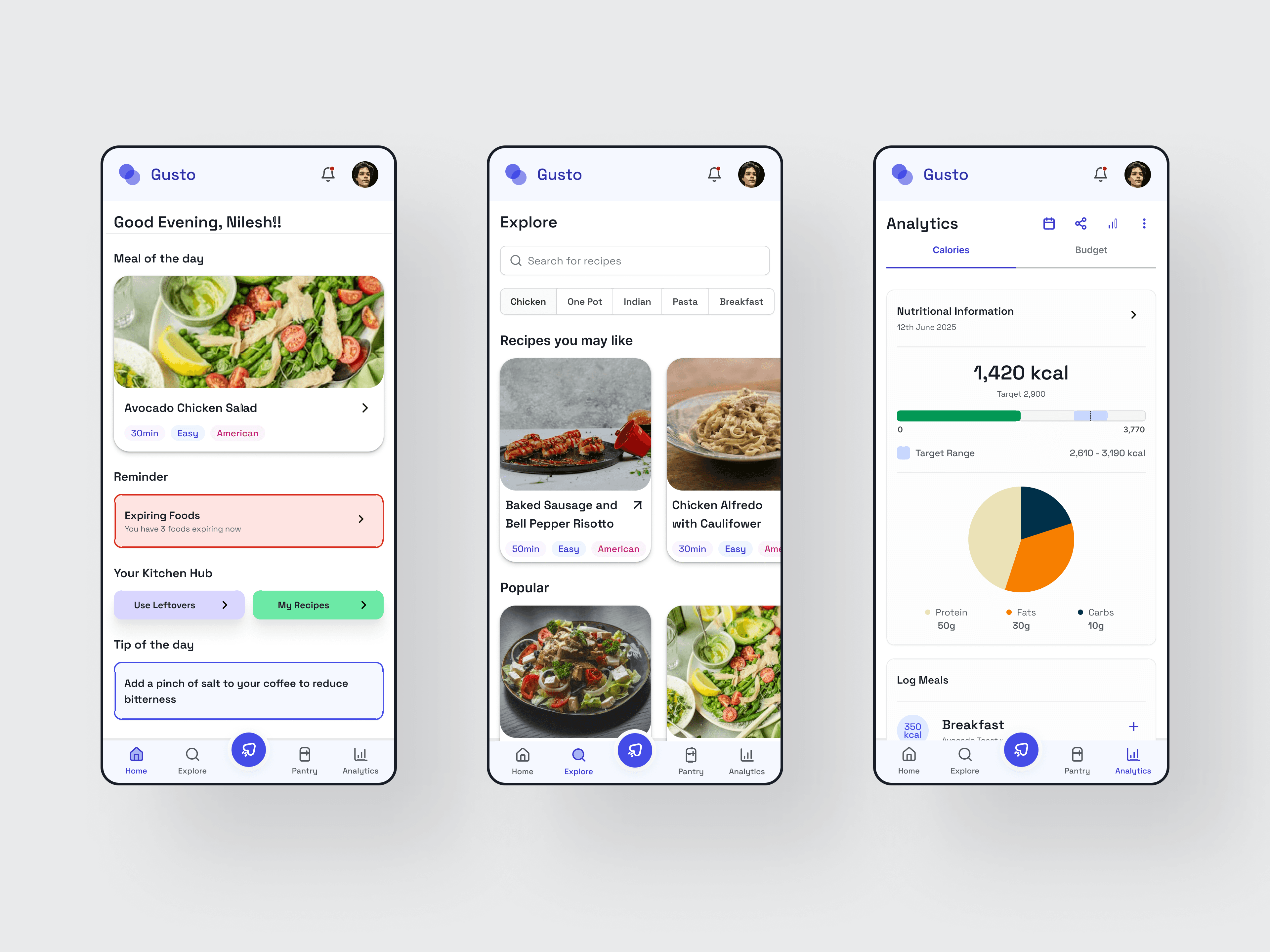
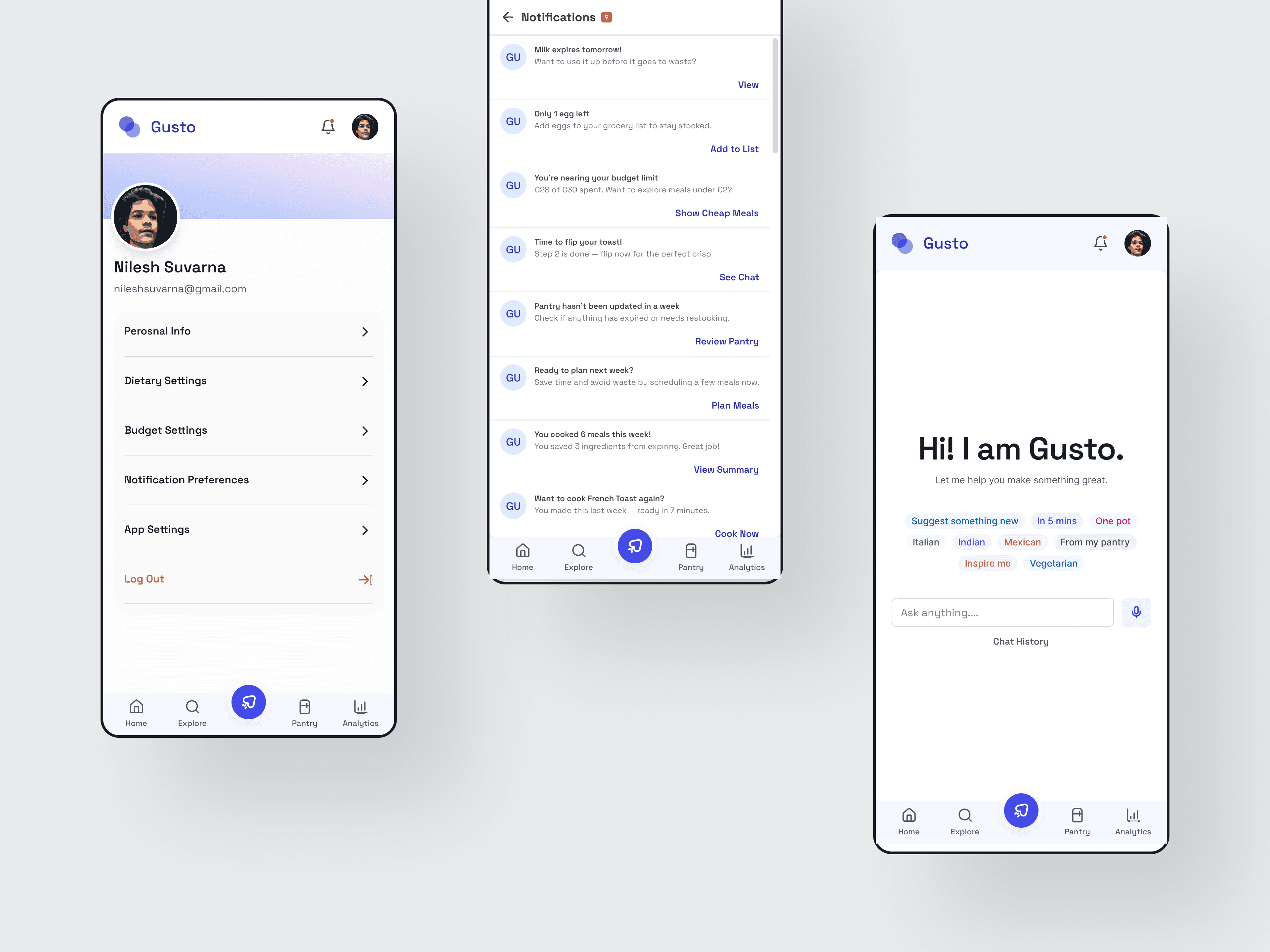
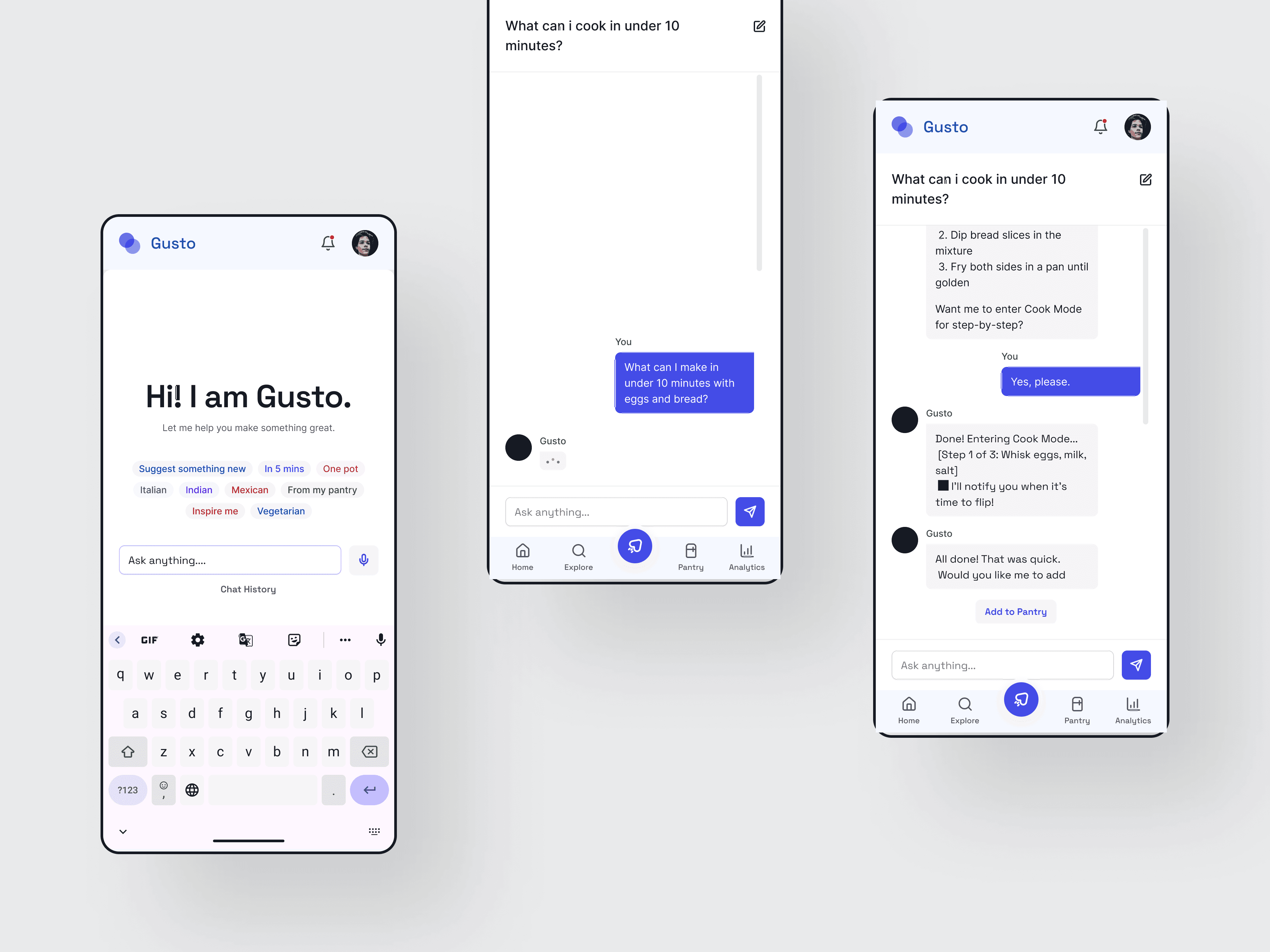
Gusto is a meal and grocery planning assistant for international students in Germany. It turns the pantry you already have into weekly plans, keeps you on budget, and explains nutrition in plain language, tuned for small kitchens, tight money, and low mental load.
Main Challenges:
Research highlighted three recurring frictions: deciding what to cook now, staying on budget, and avoiding waste from forgotten ingredients. Existing apps skew to families or fitness power users and miss student realities, shared kitchens, small storage, and price sensitivity.
Process:
Discovery
Interviews across student cooks validated pain around deciding, budgeting, and cooking for one.
Pitch deck work sharpened the narrative: meal decisions under time and money pressure.
Define
Jobs/user stories crystallized the core flows: cook from pantry when tired; update pantry/budget after shopping; avoid expiry.
Object model: User → Pantry → Plan → Recipe → Grocery List → Insights (budget and nutrition).
Ideate
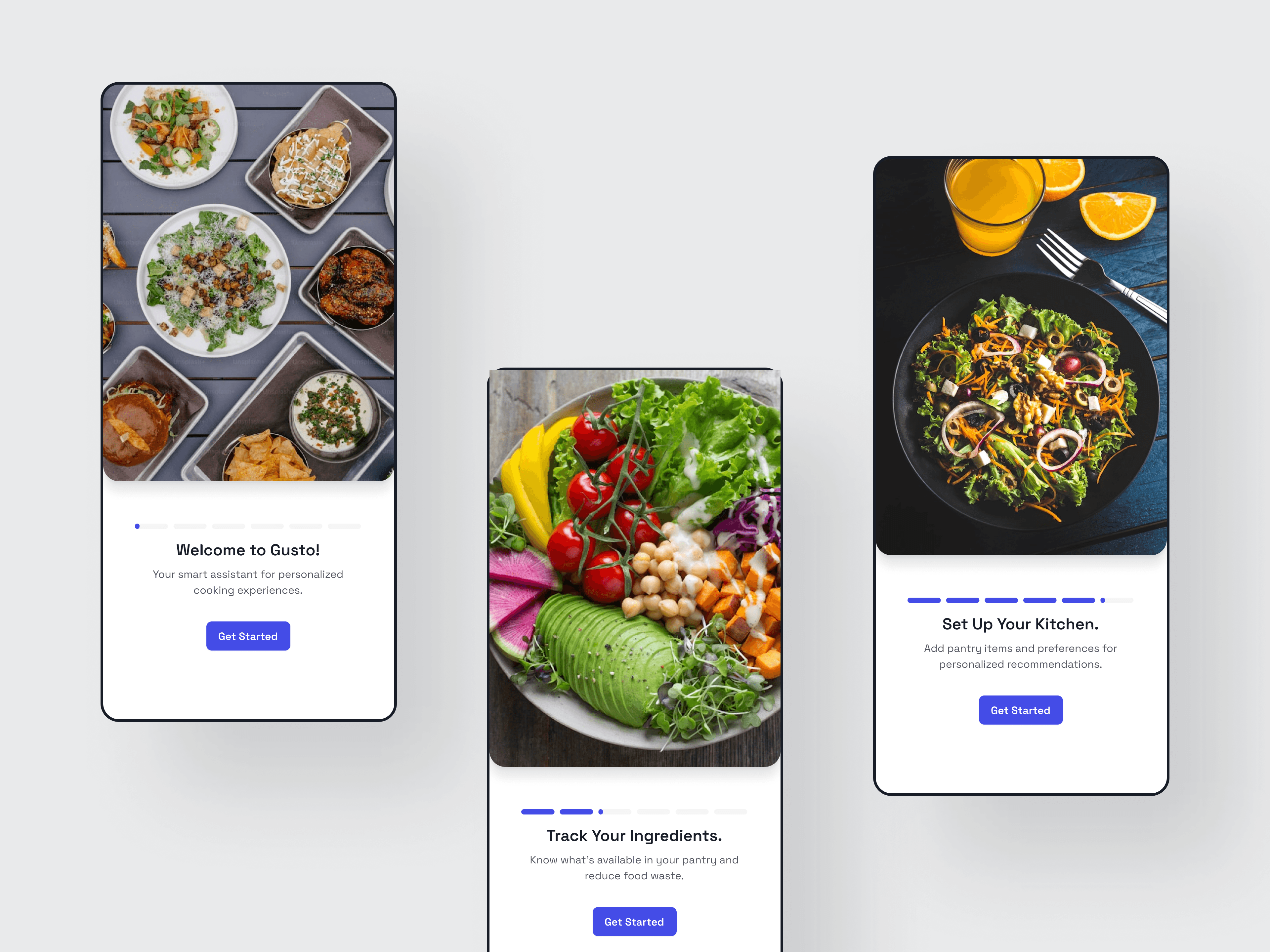
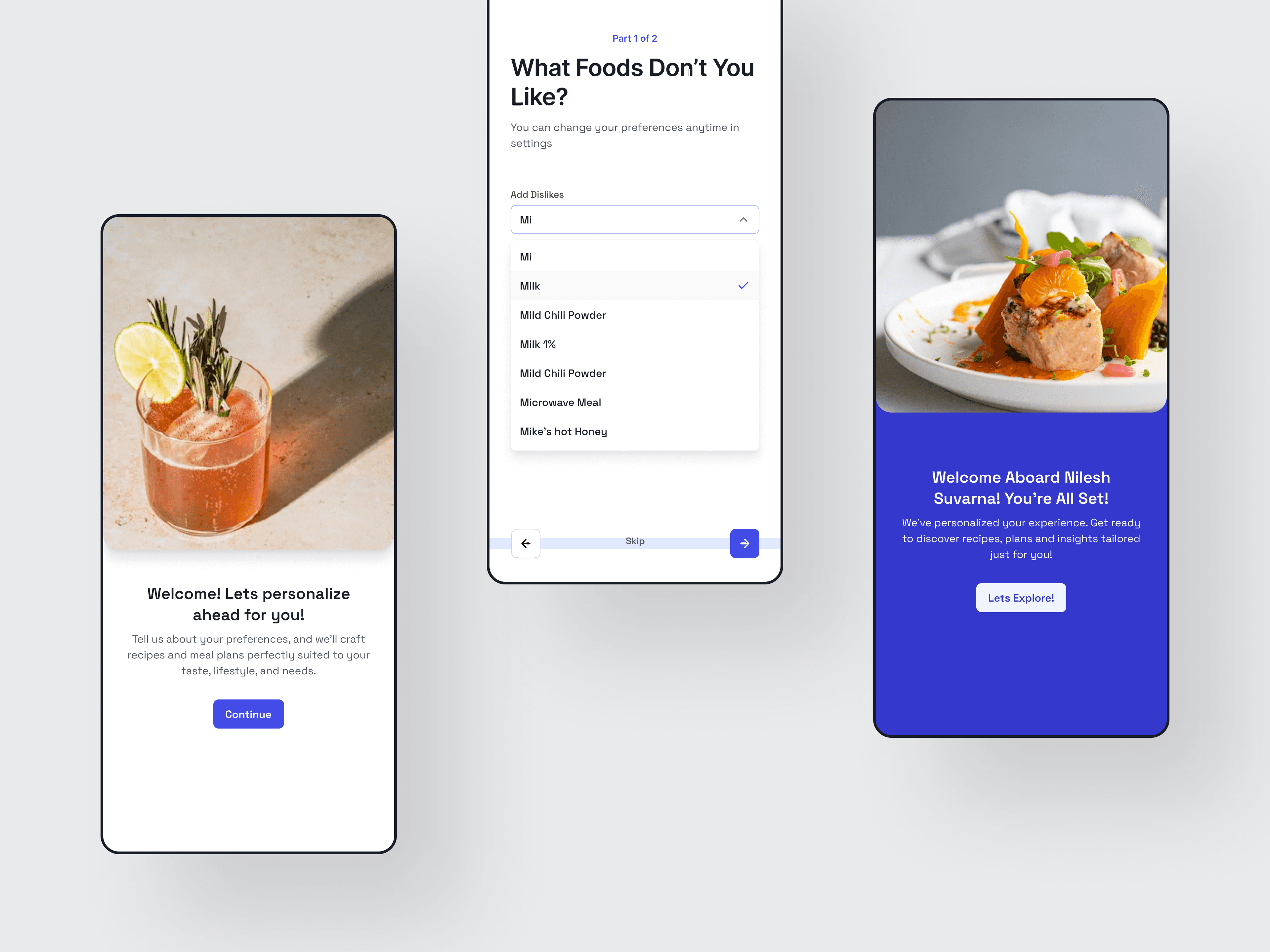
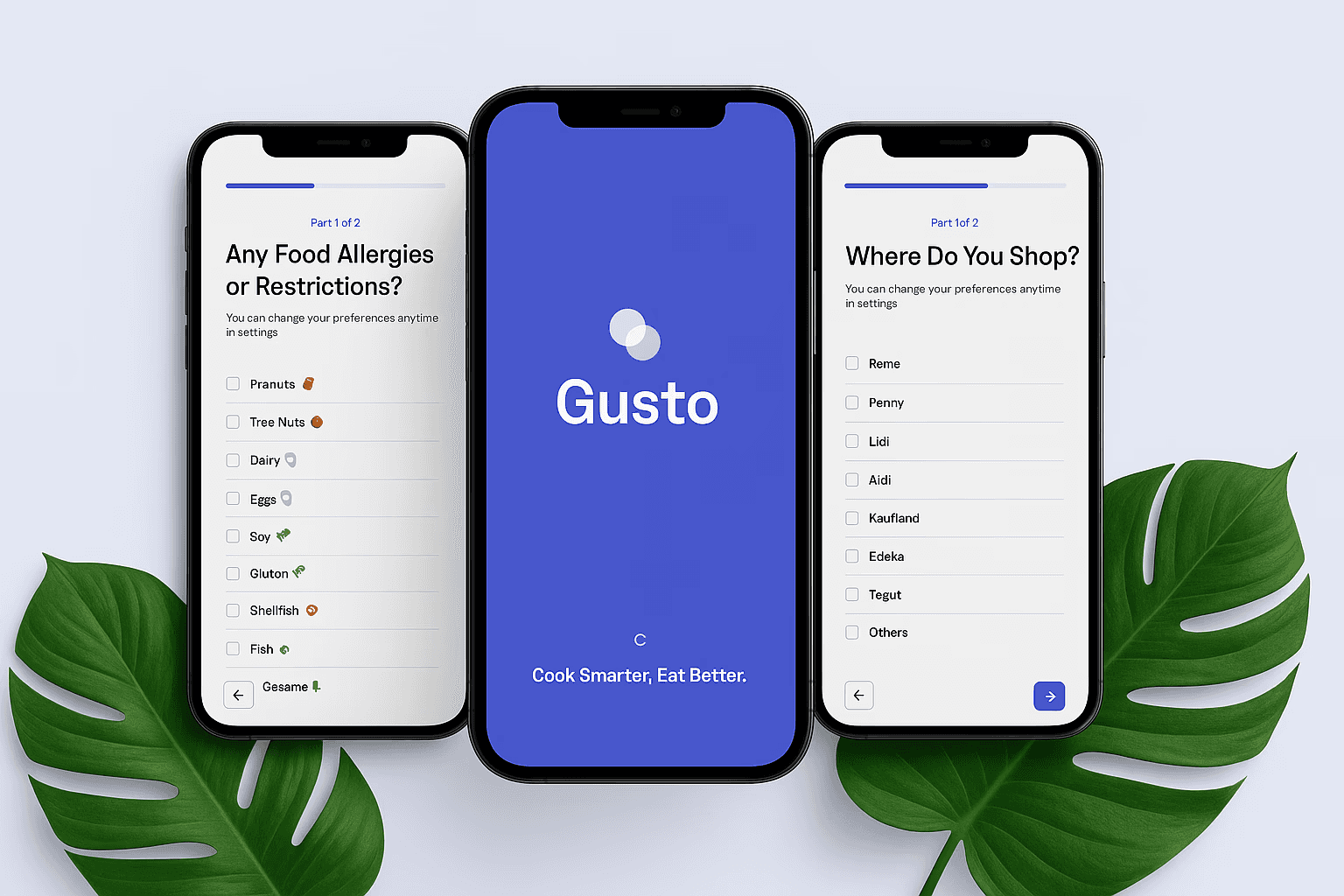
Setup: short onboarding to capture budget, diet, confidence, tools; sets defaults for plan complexity.
Suggestions: 2–3 meal ideas from pantry, filtered by time and dietary needs; expiry‑aware ordering.
Grocery planning: cost‑estimated list with substitutions when items exceed price limits; avoid duplicates already in pantry.
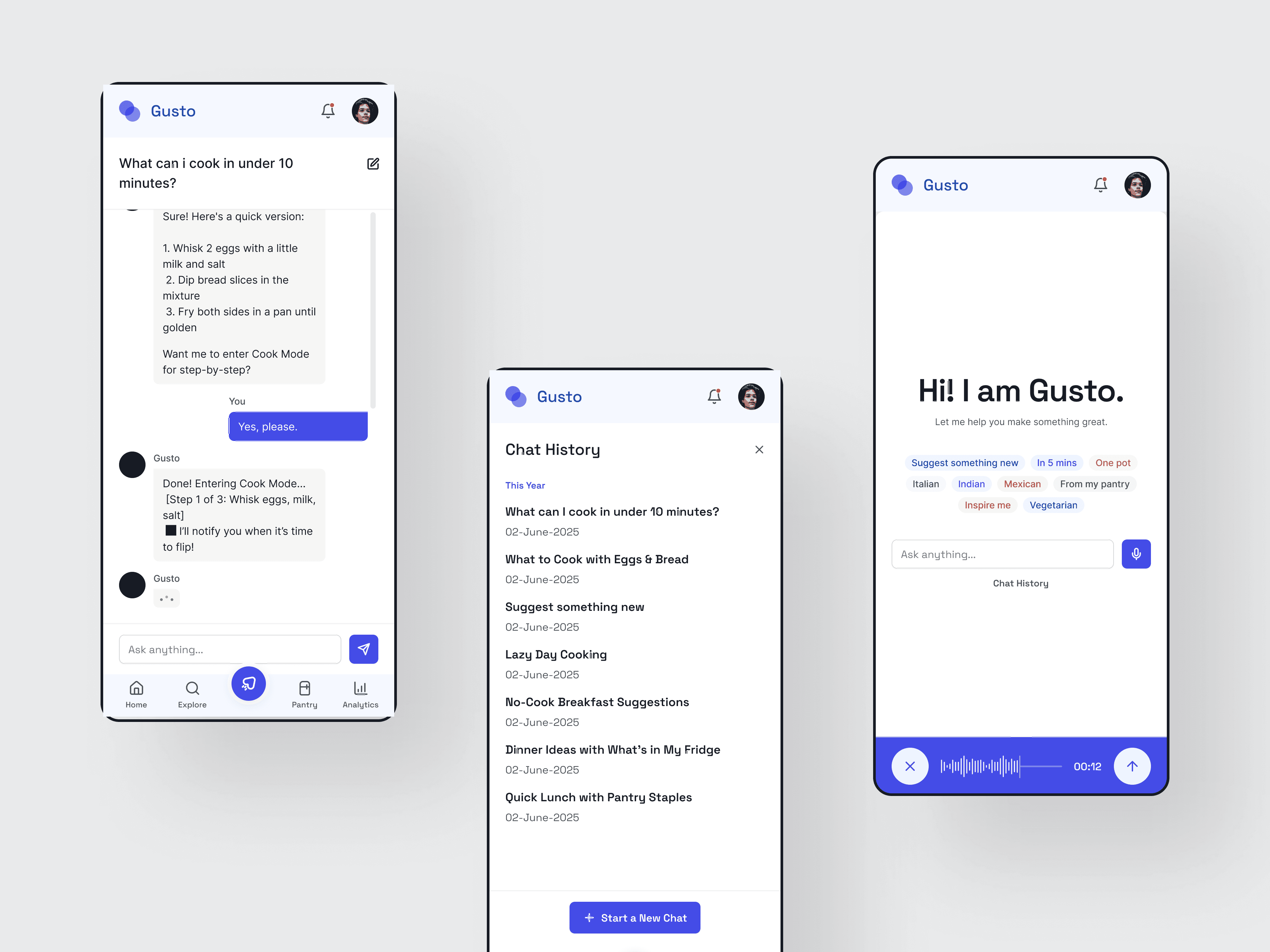
Cook Mode: step‑at‑a‑time instructions, optional voice navigation; lightweight feedback loop after cooking.
Insights: simple trends on spend, pantry usage, and macro variety; celebrate small wins.
Design
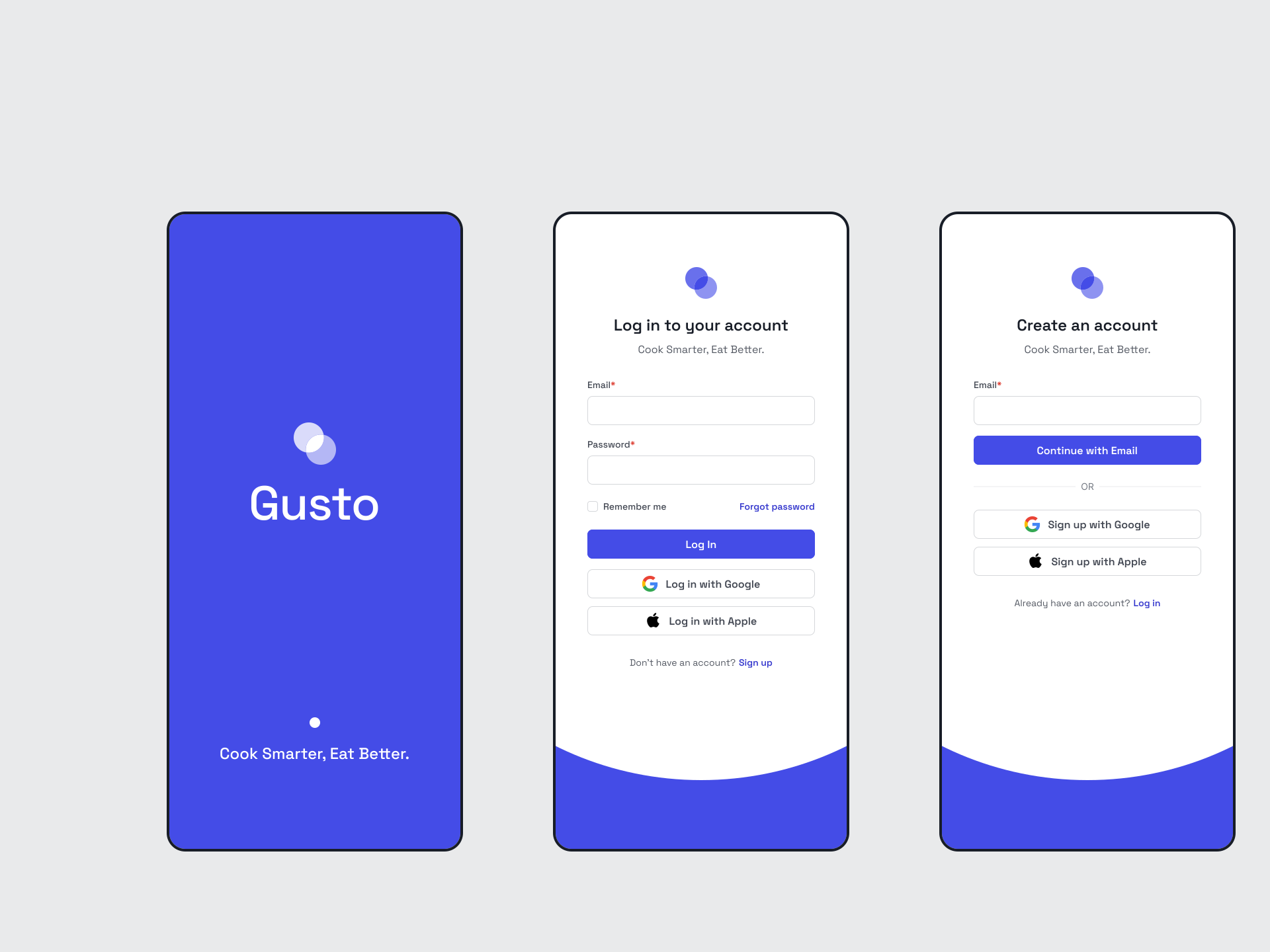
Information architecture treated like a house blueprint: clear sitemap, task‑based pages, strong foundations for labels and nav.
Mobile as primary device; short, focused interactions for kitchen and supermarket contexts.
Validation
Run the designs with the user to validate the usefulness.
Check if the pain points are successfully resolved.
Outcomes:
Confirmed that dinner decisions, budgeting, and cooking for one are real, recurring pains for international students.
Defined a clear product direction: pantry‑first plans, budget‑aware grocery lists, and small‑win insights instead of rigid meal plans.
Prepared a pilot and success criteria to measure decision fatigue, food waste, and budget adherence in a future test.
Key Learnings:
What works: focusing on one tight persona, pantry‑first suggestions and budget‑aware swaps.
What to prove: real impact on waste and budget needs a 4‑week diary + receipt study, not just interviews.
IA matters quietly: good labels and navigation should feel invisible, like plumbing that “just works.”
Recruitment tactics: student groups, short bilingual sessions, and small incentives make research feasible on a student project.
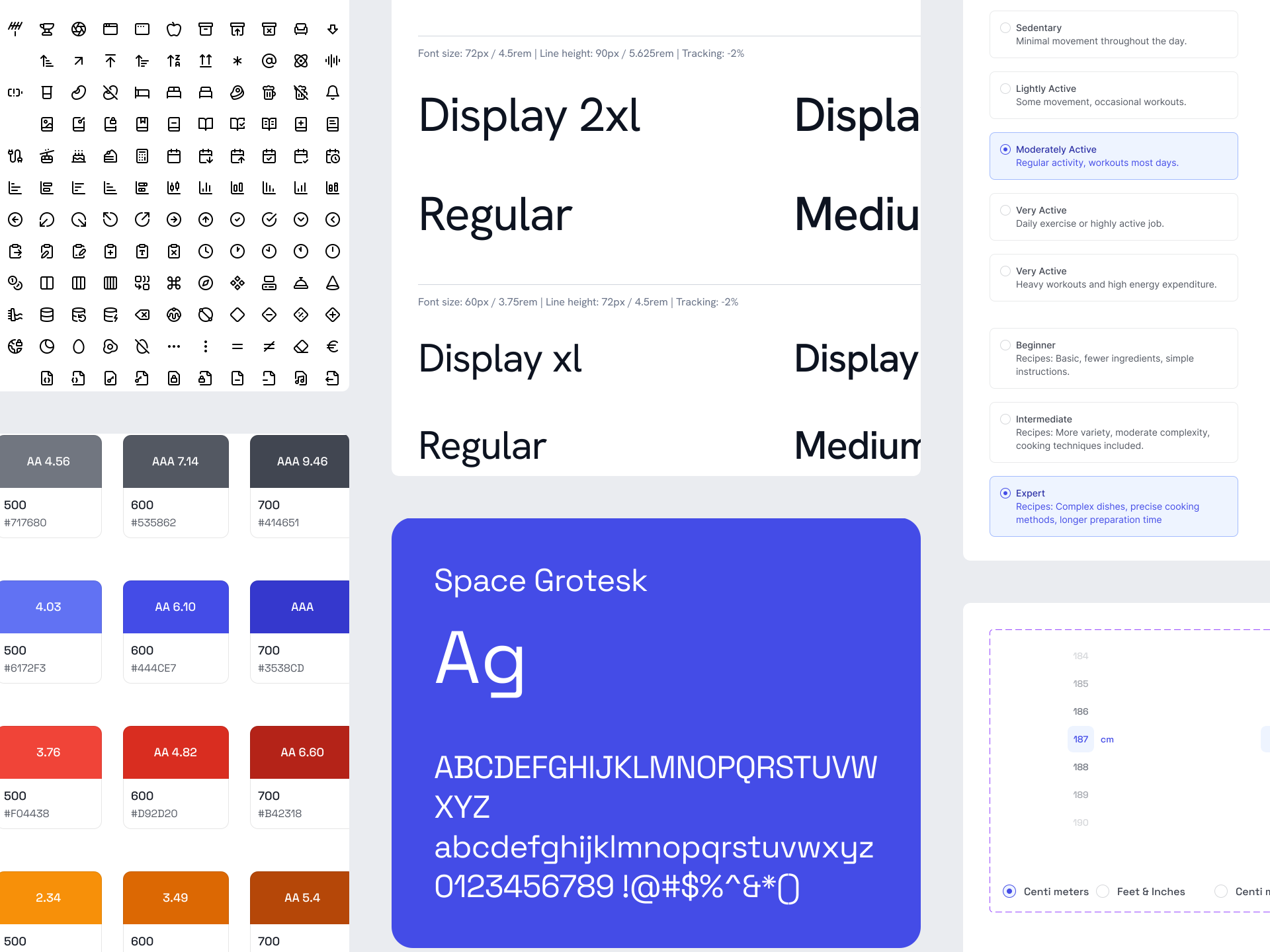
Components: